Audiobook | Cairns, Barrows and Menhirs
Cairns & Barrows
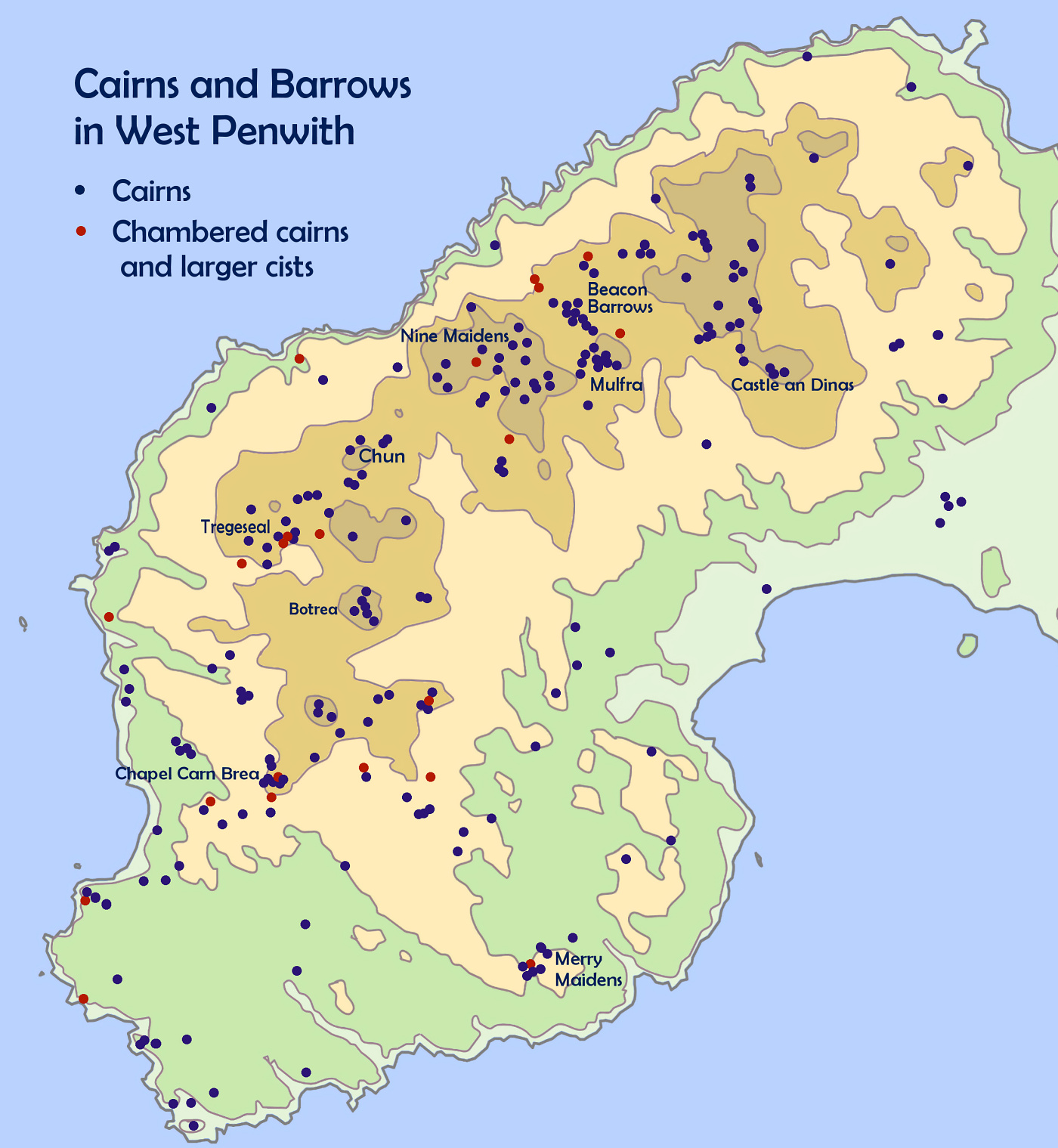
Cairns and Barrows in West Penwith. Notice their preponderance in the upland north. Generally, cairns are made of earth and stone while barrows are made of earth.
Solid cairns were built for a number of reasons, as landmarks and shrines, geomantic centres, for burial, as biogenerators and for blessing the landscape.
Chambered cairns were used as repositories for sacred objects, for treating tinctures and seeds, for blessing items, and also as places for retreat and for dying (though not for burial).
In earlier cairns, burials tended to be of bone relics of large numbers of people, buried in urns - not for whole bodies. These were the memory chips of the tribe. In the earlier Bronze Age many ways of burial and cremation were used. In later cairns, we see more of the burial and memorialisation of the great and good.
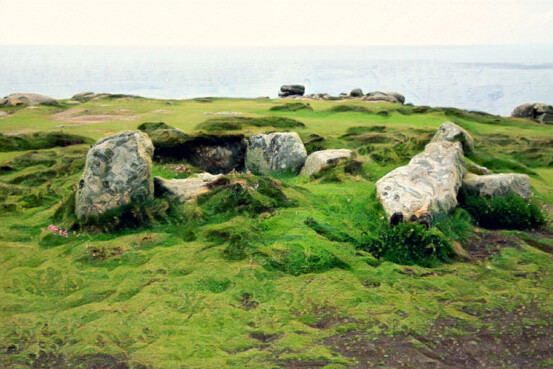
Chambered cairn at Mayon Cliff, near Sennen
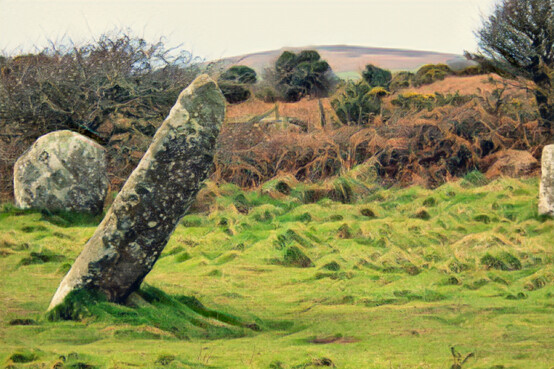
Chapel Carn Brea and its summit cairns seen from Boscawen-ûn
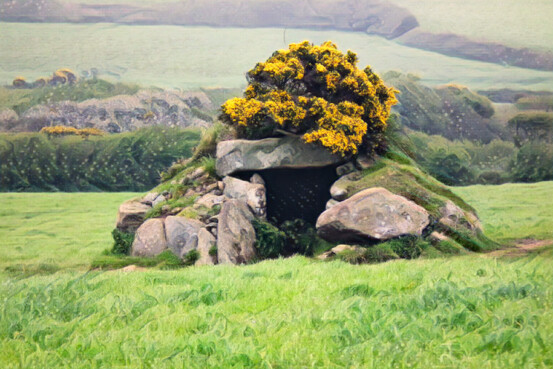
Chambered cairn at Brane
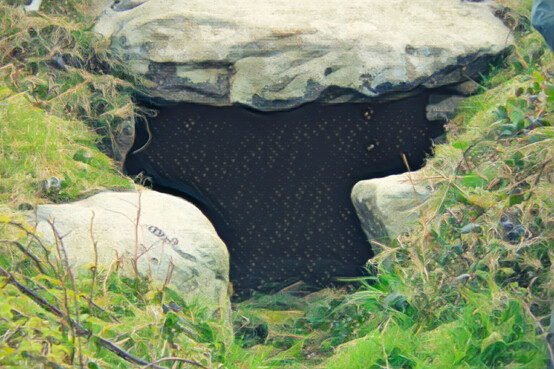
Chambered cairn at Treen, near Morvah
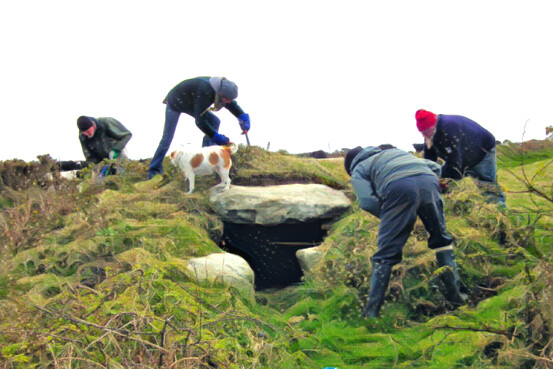
CASPN cleaning up the chambered cairn at Treen
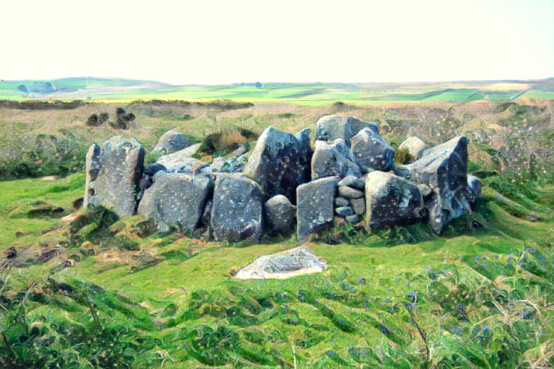
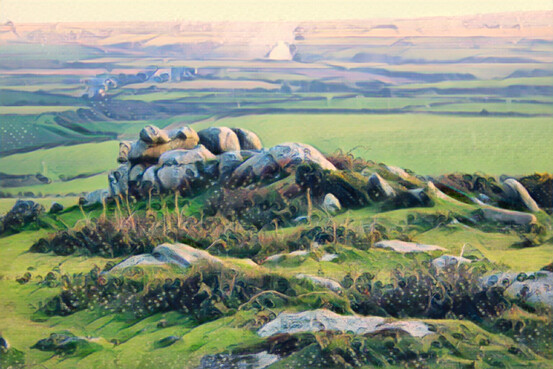
Neolithic longbarrow on Chapel Carn Brea
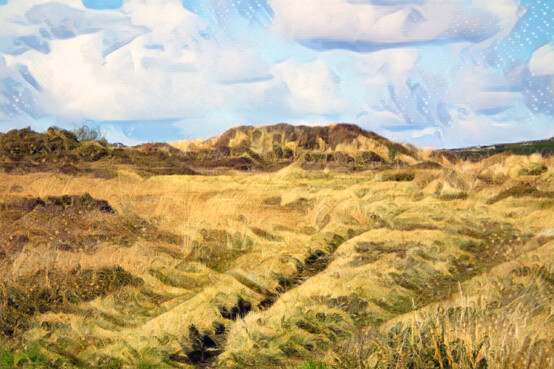
Truthwall Common C cairn at Tregeseal
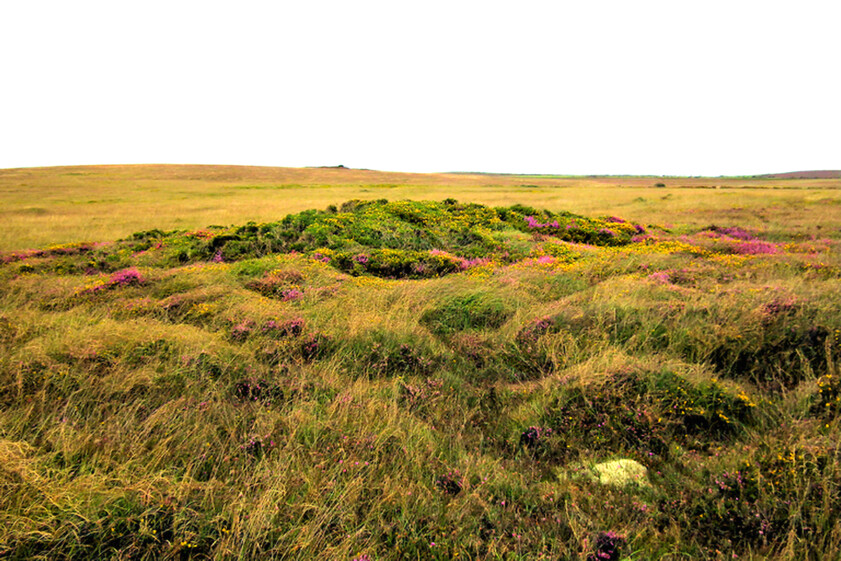
Cairn near Bodrifty (Bodrifty 4)
Menhirs
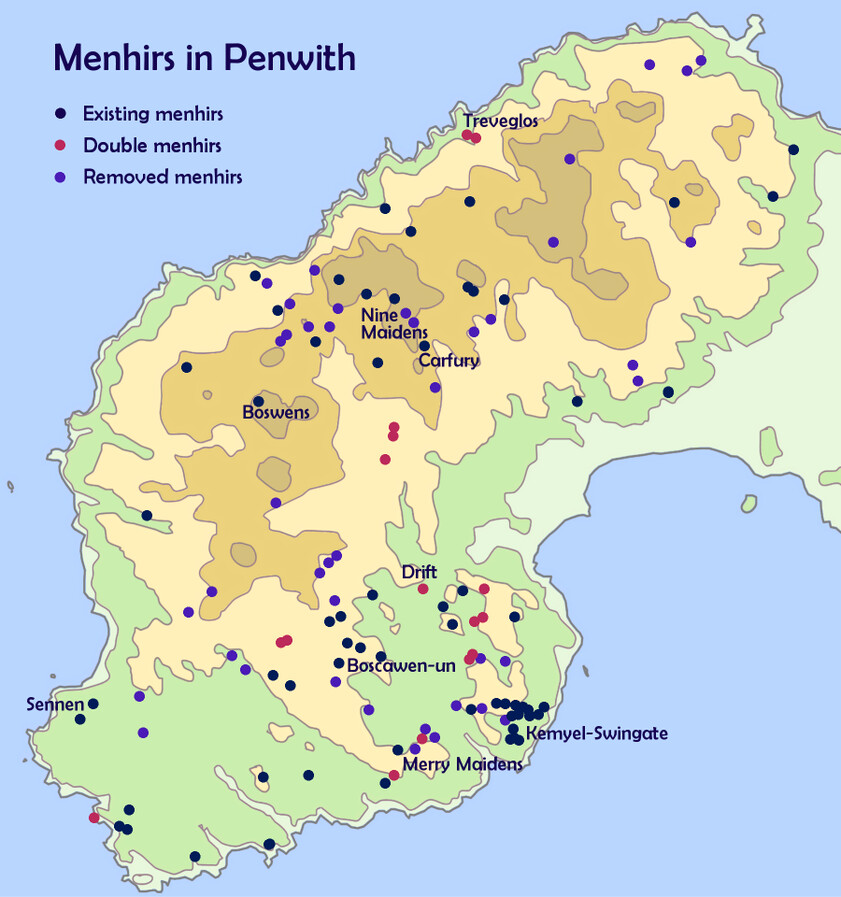
Menhirs in West Penwith, Cornwall, showing extant and removed menhirs and double menhirs.
Notice the conglomerations in the north and south of the peninsula. During the menhir-building period around 2300 BCE, the north was a settled landscape going back to the Neolithic, while the south was newly colonised - the menhirs played a part in that colonisation.
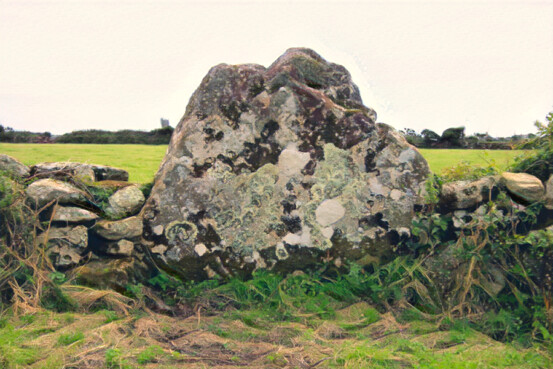
Banns Farm menhir
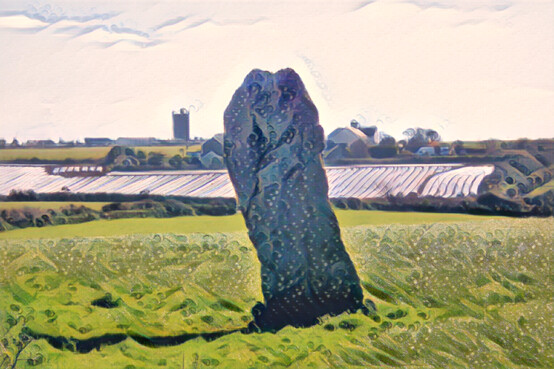
Trelew menhir
St Buryan church in the background
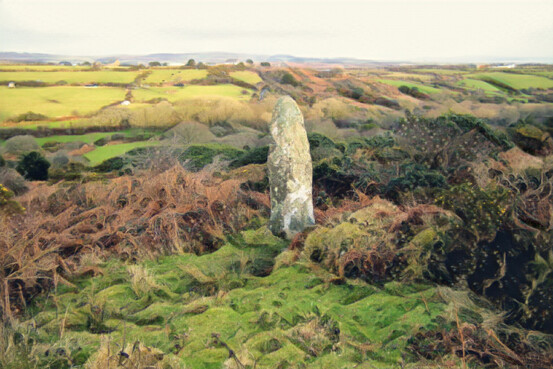
Carfury menhir
a major alignment centre and relay menhir
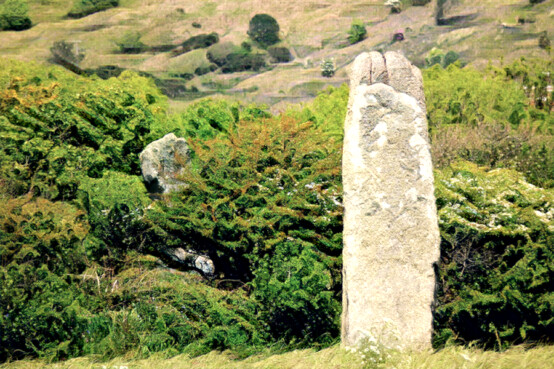
The Pipers double menhirs
two proxy menhirs at the Merry Maidens
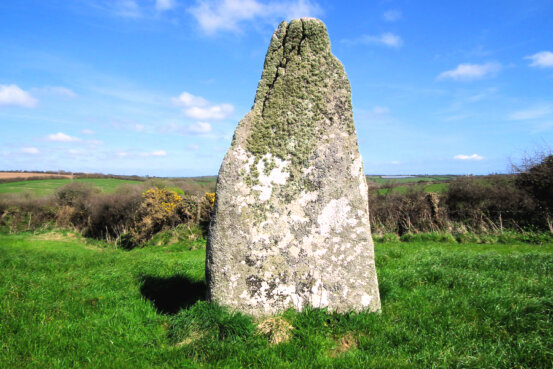
The Blind Fiddler
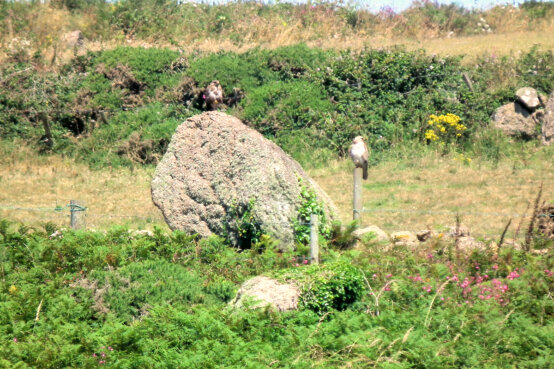
Trevean 1 menhir, near Carn Les Boel
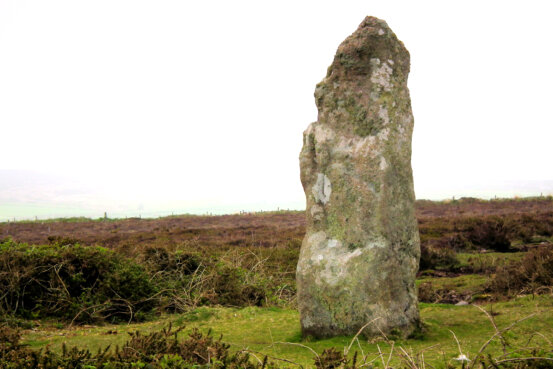
Boswens Menhir
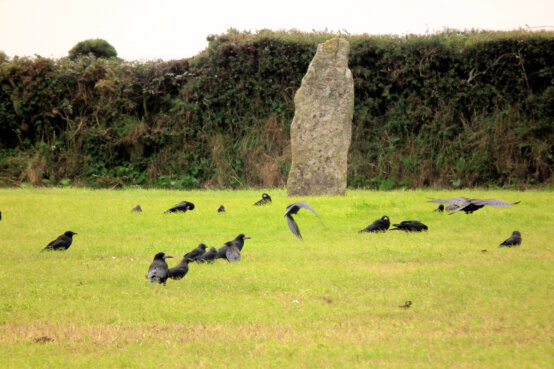
Trevorgans Menhir, near St Buryan
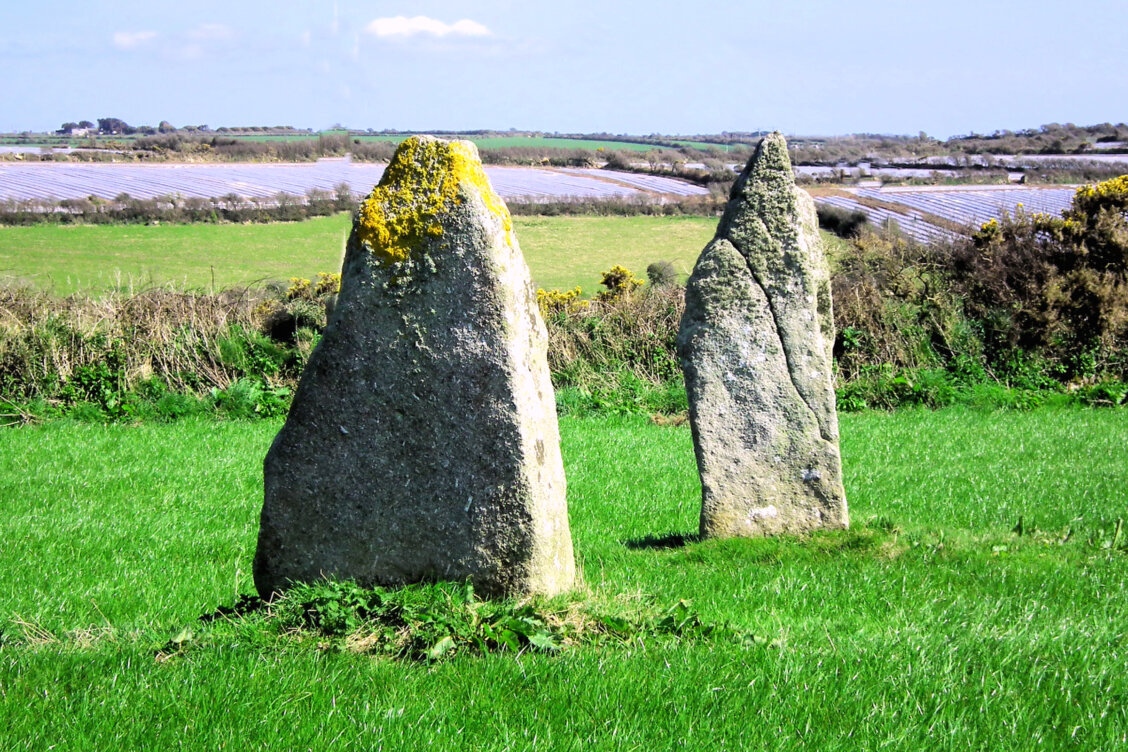
The Drift Menhirs
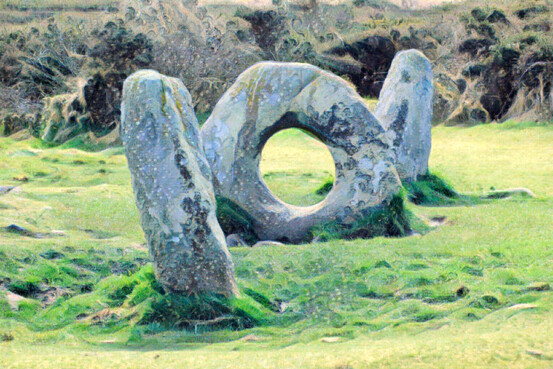
Mȇn an Tol
formerly a stone circle
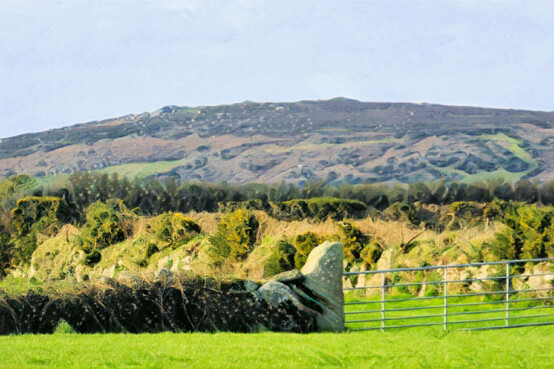
Not a menhir - a gatepost
As seen from Trevorgans menhir - Chapel Carn Brea behind